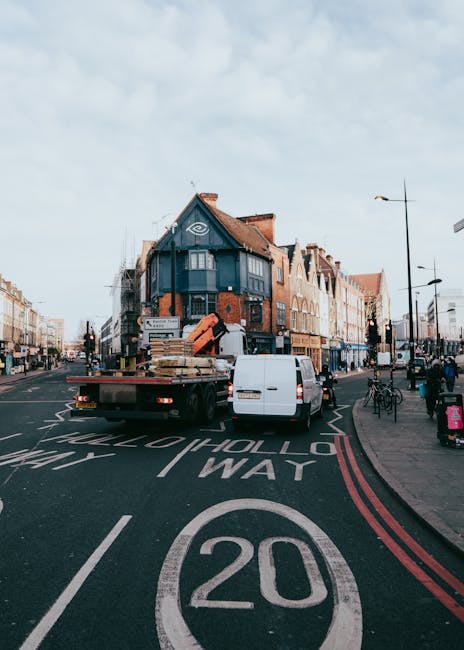
Parking Suspensions & Van Access on London Road, Thornton Heath
Posted on 12/07/2026
Parking Suspensions & Van Access on London Road, Thornton Heath: A Practical Moving Guide
Trying to move on London Road in Thornton Heath can feel straightforward right up until the van turns up and the kerbside space is gone. One temporary parking suspension, one narrow stretch of road, and suddenly the whole plan changes. If you are dealing with Parking Suspensions & Van Access on London Road, Thornton Heath, the difference between a smooth move and a stressful one is usually preparation, timing, and a realistic loading plan.
In this guide, we will walk through what parking suspensions actually mean in a moving context, how van access tends to work on busy South London roads, and what to do if the available space looks less than ideal. You will also find practical checklists, common mistakes to avoid, and the small local details that can save you a very long day. Truth be told, most moving headaches on roads like London Road are preventable.

Why Parking Suspensions & Van Access on London Road, Thornton Heath Matters
London Road is one of those streets where access decisions matter more than people expect. It is a working road, not a staging area. Delivery vehicles, buses, local traffic, residents parking, and day-to-day footfall can all compete for the same few metres of space. Add a moving van into that mix and things get tight, quickly.
For house moves, flat moves, office clearances, or even a single heavy item, the loading position can affect everything: how long the move takes, whether items can be carried safely, and whether your van ends up circling the block while someone waits on the pavement with a sofa. Not ideal. It also affects neighbour relations, which is a quiet but real part of moving in London.
A parking suspension can temporarily remove a section of parking or loading space for roadworks, utility works, removals, or other authorised activity. If you turn up expecting to park where you always can, you may find cones, signs, or a restriction you had not counted on. That is where local awareness starts to pay off.
Key takeaway: good van access is not just about convenience. It shapes safety, timing, and the overall cost and calmness of your move.
For anyone planning a move in Thornton Heath, it helps to think in terms of access first, packing second. If you want deeper moving preparation advice, the guides on smart packing and cutting the clutter before a move are useful companions to this one.
How Parking Suspensions & Van Access on London Road, Thornton Heath Works
In practical terms, van access usually comes down to three questions: where can the vehicle stop, how long can it stay there, and how far do items need to be carried? A parking suspension changes the answer to the first question, sometimes dramatically.
On a road like London Road, a suspension may cover part of the kerbside, a bay, or a loading area. The signs will usually indicate where restrictions apply, for what dates, and for what reason. If you are moving house, the point is to plan your loading and unloading around those limits rather than hoping to "make it work" on the day. Hope is not a parking strategy.
Here is the usual moving logic:
- Confirm access early. Check whether the property frontage, nearby side streets, or any loading bays can realistically take a van.
- Decide the van size. A larger vehicle may reduce multiple trips but be harder to place close to the door.
- Allow for carry distance. Even a short extra walk can slow down a heavy move if you have stairs, awkward furniture, or awkward weather. A wet pavement in the morning is not much fun either.
- Build in contingency. If the closest space is unavailable, have a backup parking plan ready before the crew arrives.
For a wider look at moving services and planning support, the services overview and the practical man with a van Thornton Heath page can help you understand how access needs fit into the booking.
When planning a move in the CR7 area, timing matters too. If you are trying to avoid busy periods, the article on the best times to book a van in Thornton Heath gives a helpful sense of how local demand affects schedules.
Key Benefits and Practical Advantages
Getting parking and access right on London Road is not just about avoiding hassle. It can improve the entire move in ways that are easy to underestimate until you have done one badly and one well.
- Faster loading and unloading. Less distance between the van and the door usually means fewer delays.
- Reduced lifting strain. A sofa carried twenty metres is very different from a sofa carried sixty metres, especially if there are stairs involved.
- Lower risk of damage. Shorter carry routes tend to mean fewer knocks to furniture, frames, and walls.
- Better schedule control. A proper parking plan helps prevent late starts and domino-effect delays.
- Less stress on the day. This one sounds soft, but it matters. A calmer move is usually a safer move.
There is also a financial angle. The longer a move takes, the more likely it is that time-based charges, extra labour, or added waiting time creep in. If you want to understand how different factors can affect the final bill, the piece on hidden fees in Thornton Heath removals pricing is worth a look.
And for people moving bulky items rather than a full household, access can be the whole job. A bedroom move, a wardrobe, a freezer, or a piano all become simpler when the van can stop sensibly and safely.
Who This Is For and When It Makes Sense
This topic is relevant to far more people than first-time movers. In practice, parking suspensions and van access planning helps anyone who needs to load or unload on a busy road with limited waiting space.
- Home movers with furniture, boxes, appliances, or fragile items.
- Flat movers dealing with narrow entrances, communal access, or shared parking.
- Students moving in or out of Thornton Heath with a tight timetable and too many bags.
- Office movers trying to keep disruption low during working hours.
- Single-item movers transporting bulky items like beds, sofas, or pianos.
- Last-minute movers who need same-day support and cannot afford trial-and-error parking.
If you are in a flat or a compact terrace, access planning becomes even more important. The local guides on flat removals in Thornton Heath and narrow terraced stairs moving solutions are especially useful if the issue is not just the road outside, but the route inside as well.
It also makes sense if your move falls near a school run, commuter rush, or a busy shopping stretch. In those moments, a van parked badly can create a queue fast. Nobody wants to be that person with a tailback and a mattress. Awkward.
Step-by-Step Guidance
Below is a simple, practical way to approach van access on London Road without turning the day into a guessing game.
- Survey the site before moving day. Look at the frontage, the road width, and whether there is any realistic place for a van to stop. If possible, do this at roughly the same time of day as the move.
- Check for signs and restrictions. Parking suspensions, yellow lines, loading limitations, and time-based restrictions all affect your plan. Do not rely on memory alone.
- Estimate the carry route. Count steps, doorways, kerbs, and awkward turns. A short carry with multiple obstacles can be slower than a longer clear route.
- Match the van to the job. A smaller van may be easier to position, but a larger van might reduce repeat journeys. It is a trade-off, not a one-size-fits-all decision.
- Pack the load with access in mind. Keep the first-out items near the door, label boxes clearly, and avoid burying essentials under soft furnishings.
- Prepare neighbours and residents where appropriate. A bit of warning goes a long way if you are likely to block part of the pavement briefly or use shared access.
- Have a fallback. If the closest space is unavailable, identify the next best stopping point and the safest walking route from there.
For packing that supports a faster loading sequence, the guides on decluttering and cleaning before moving out and packing and boxes Thornton Heath are both practical next steps.
Small detail, big impact: if your sofa, bed, or desk is going out first, make sure it is not boxed in by smaller items. The order of loading matters more than people think.
Expert Tips for Better Results
After handling enough local moves, a few patterns become obvious. The best results usually come from the people who plan the dull little details. The unglamorous stuff. The list nobody wants to make, but everybody benefits from.
- Choose a quieter time if you can. Early starts can sometimes make access easier, though that is not always possible.
- Use a spotter if the van is close to traffic. One person guiding the driver, one handling the door, one managing the load - simple, but effective.
- Protect the route, not just the item. Floor runners, blankets, and door protection can save you a repair headache later.
- Keep high-need items separate. Kettles, chargers, medication, documents, and a small tool kit should not be buried in the middle of the van.
- Think about weather. London rain turns a straightforward carry into a slippery, slower one. It happens. Of course it does.
If you are moving heavier items, it is worth reading about solo strategies for heavy lifting tasks and kinetic lifting practices. Even if you are not lifting alone, these articles explain movement, balance, and body positioning in plain English.
For specialist items, proper planning is even more important. If you are moving a piano, for example, access, slope, and carry distance all matter a great deal. The guide on why a professional should move your piano is a good reminder that some items are best handled with extra care.

Common Mistakes to Avoid
The same mistakes come up again and again, and they are usually the boring ones. That is the funny bit, really. Nothing dramatic. Just a missed sign, a wrong assumption, or a van that was one size too ambitious for the road.
- Assuming parking will be available. On busy roads, assuming is expensive.
- Ignoring suspension notices. If a bay is suspended, it is suspended. Planning around it is better than arguing with cones.
- Booking the wrong vehicle size. Too big can be awkward; too small can mean multiple trips. Either way, the day suffers.
- Forgetting the carry route. Narrow stairs, low door frames, and tight turns can create bottlenecks that no parking space can fix.
- Leaving packing until the van arrives. That is one of those choices that feels manageable at 8 a.m. and ridiculous by 10.
- Not checking disposal needs in advance. If you are clearing bulky items, sort that separately. A moving van is not automatically a waste solution.
For more on clearing unwanted items safely, the article on disposing bulky waste in Thornton Heath without fines is a helpful companion.
A small but common oversight: people tidy the inside of the home and forget the pavement outside the home. But that outside bit, honestly, is often where the whole day is won or lost.
Tools, Resources and Recommendations
You do not need a huge toolkit to handle access well. In most cases, a handful of sensible items and a little organisation are enough.
| Tool or resource | Why it helps | Best use case |
|---|---|---|
| Measuring tape | Confirms whether furniture, doors, and van space line up properly | Before booking vehicle size |
| Labels and marker pens | Makes loading order and room placement far easier | Busy household or full-day move |
| Furniture blankets | Protects items during short carries and van loading | Sofas, tables, mirrors |
| Door protectors | Reduces knocks on tight doorways and hallways | Flats, terraces, narrow entrances |
| Phone camera | Creates a quick record of parking signs, access points, and item condition | Useful before and after the move |
If you are comparing moving support options, the removal services Thornton Heath and removal van Thornton Heath pages can help you think through what level of help is actually needed.
And if you are still gathering the basics for a larger move, the guides on house removals Thornton Heath, furniture removals Thornton Heath, and storage Thornton Heath may be useful when space or timing is tight.
Law, Compliance, Standards, or Best Practice
When parking restrictions or suspensions are involved, the safest approach is to treat signage and local instructions as the controlling factor. If a bay is suspended, or if loading is restricted, do not improvise in a way that risks obstruction, unsafe unloading, or conflict with other road users. That might sound obvious, but on moving day people often get a little too optimistic.
Best practice is straightforward:
- Check all visible signs on the day.
- Allow enough time for legal, safe loading.
- Avoid blocking driveways, crossings, or emergency access.
- Use proper lifting and manual handling techniques.
- Keep communication clear between driver and movers.
If your move is likely to involve council-controlled restrictions or more formal access arrangements, it is sensible to review the guidance in Croydon Council permits for Thornton Heath removals. That article is especially useful if you are trying to understand the moving-related paperwork side of things without getting buried in admin.
For broader confidence around safety, insurance, and service standards, the pages on insurance and safety and health and safety policy are good support reading.
Options, Methods, or Comparison Table
There is no single "best" way to handle van access on London Road. It depends on the property, the vehicle, and how much you are moving. This quick comparison may help.
| Approach | Best for | Pros | Trade-offs |
|---|---|---|---|
| Park as close as possible to the property | Short moves, fragile items, heavy furniture | Fastest loading, least carrying | May be unavailable during suspensions or busy periods |
| Park a short walk away | Areas with limited kerbside space | Usually easier to find legal space | Longer carries, slower loading, more fatigue |
| Use a smaller van | Narrow roads or restricted access | More flexible positioning | May require more trips |
| Use a larger van with careful timing | Full-house moves, high-volume loads | Fewer journeys, efficient for volume | Harder to manoeuvre, more planning needed |
| Stage items before the van arrives | Busy households, time-sensitive moves | Speeds up the process | Needs organisation and safe stacking |
In some cases, a practical mix works best: one vehicle, one clear loading window, and a second-person helping with access and timing. That is often enough. No drama required.
Case Study or Real-World Example
A typical Thornton Heath move might look like this: a two-bedroom flat on or near London Road, a van booked for late morning, and a temporary parking issue because the nearest bay is suspended. The occupier assumes the van can stop outside anyway, but the driver spots the restriction early and pauses the plan.
Instead of squeezing into the first available gap, the team identifies a legal stopping point a little further along the road, checks the carry route, and moves the smaller boxes first while the larger items are prepped near the door. The sofa is wrapped, the mattress is kept flat, and the heavier pieces are loaded once the pathway is clear. It is not fancy. It is just organised.
The move still takes effort, of course. But because the access problem was handled before the first box left the hallway, there are fewer delays and less pressure on everyone. The residents are happier, the crew is less worn out, and the day feels manageable instead of messy.
If the flat layout itself is part of the challenge, the local guide on Thornton Heath Library area narrowstreet moving tips gives a good feel for how cramped local access can affect a move even when the road outside seems fine.
Practical Checklist
Use this checklist before moving day. A quick review the night before can save hours later.
- Confirm the moving date and arrival window.
- Check for parking suspensions or loading restrictions on London Road.
- Measure key furniture and doorways.
- Decide whether the van size suits the available access.
- Clear the route from rooms to the exit.
- Label boxes by room and priority.
- Set aside essentials for first use at the new address.
- Prepare blankets, tape, tools, and tie-downs.
- Plan a backup stopping point in case the closest bay is unavailable.
- Tell neighbours or building management if access may be briefly affected.
- Keep valuables and documents with you, not in the van.
- Review the schedule and allow for small delays.
For a fuller move prep, the article on navigating your house move without breaking a sweat pairs nicely with this checklist.
Conclusion
Parking suspensions and van access on London Road in Thornton Heath are not side issues. They are central to how smoothly a move will run. If the van cannot stop where it should, everything becomes slower, heavier, and more stressful than it needs to be. Get the access right and the rest of the move has room to breathe.
That does not mean every move needs perfect conditions. Far from it. It just means the best outcomes usually come from careful planning, realistic expectations, and a bit of local knowledge. Whether you are moving a single sofa, a full family home, or a last-minute student load, the same idea applies: keep the route clear, the vehicle well placed, and the day as simple as you can make it.
If you are weighing up support for a move on or around London Road, take a moment to look at the available moving options, compare the access needs honestly, and choose the setup that fits your property rather than forcing the property to fit the setup.
Get a free quote today and see how much you can save.
And if you are preparing for the move already, keep it steady. A well-planned day has a nicer rhythm to it, and you will feel that difference by lunchtime.